



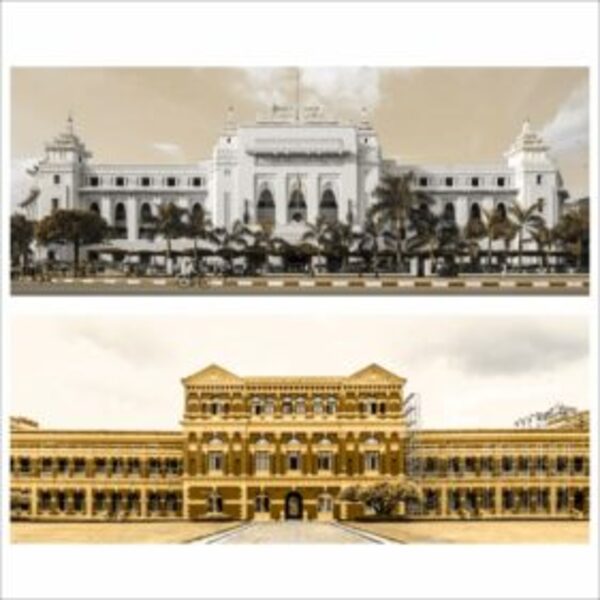
Project Location: Myanmar
Consulting Firm: Joint Venture of VestA and Protek-Yapi
Start Date: 2021
Duration of Consulting Services: 8 months (The contract was terminated because of the coup.)
Client: World Bank Group
The main objective of the Technical Assistance (TA) was to conduct a comprehensive seismic vulnerability assessment to development of the seismic resilience strategy for critical public buildings in Yangon. Methodologies for building recognition and prioritization, as well as formulation of alternatives for the strategy framework, were suggested in order to prioritize buildings and identify intervention actions to improve the performance and safety of public buildings.
The second task of the project that was development of a methodology for a decision-making framework to recommend a list of potentially ‘eligible’ public buildings aims to create a ground for future prioritization of the building’s stocks specifically in Yangon but generally in Myanmar.
Service Provided:
In this report, in addition to the detailed approaches and methodologies for the implementation of the tasks, the outcomes of the comprehensive literature review on the natural hazards, disaster risk reduction policies and recommendations, urban resiliency strategies, profiles of the building data of Yangon city, list of “candidate buildings”, reference standards and codes, and most common building typologies have been provided. Finally, the project management plan in terms of project communication and organization, project schedule, change management, and documentation and meeting have been presented.
The proposed methodology and framework included a range of different criteria such as: geographic location of the area with respect to the active fault zones, potential risk of a major earthquake, population density and other demographic data, flood risks, building vulnerability, economic benefits, public service functionalities, role in the emergency management and response, and other factors as appropriate to select and priorities public facilities for further assessment. The prioritization has been developed based on providing a ranking and relative importance of each criterion. This methodology has been prepared not only for the prioritization of a set of buildings proposed under the project (i.e. 186 from YCDC and 60 from UN-Habitat) but also is a replicable approach to the prioritization of building assessments by YCDC in the future.